The Hidden Tax of Reactive Compliance
In regulatory compliance, 'Just in Time' becomes a disaster—reactive surges create a massive, unrecorded liability
The Reactive Compliance Trap
In financial markets, "Just in Time" is a strategy for efficiency. In regulatory compliance, "Just in Time" is a strategy for disaster. Yet, many MedTech and pharmaceutical companies operate in a cycle of reactive surges. They drift into a state of entropy—documents expire, SOPs diverge from practice, training lags—until an external event forces a correction.
That event might be a notified body audit, a customer inspection, or a 483 observation from the FDA. Suddenly, the organization mobilizes. Operations stall. Consultants are hired at premium rates. This is the Hidden Tax of Reactive Compliance. It is a massive, unrecorded liability on the balance sheet of life sciences companies, often disguised as "operating costs."
Calculating the Tax
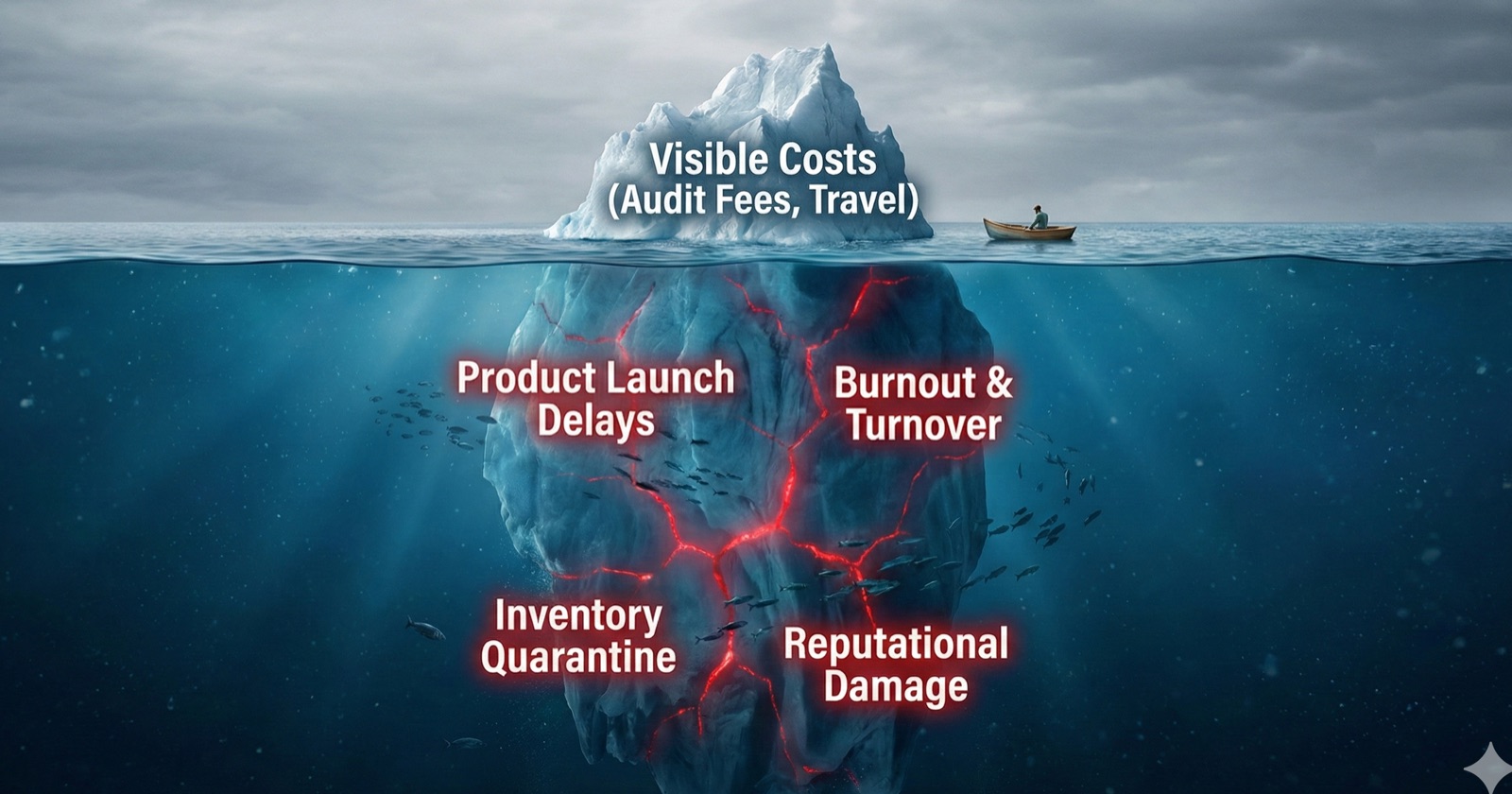
The tax is not just the cost of the audit itself. It manifests in three distinct categories:
1. The Remediation Premium
According to industry benchmarks, the cost to fix a quality issue in the field is 10x to 100x higher than fixing it during design or production. When compliance is reactive, you are finding issues at the most expensive possible stage—often during the audit prep or, worse, during the audit itself. This leads to "remediation projects"—expensive, frantic efforts to backfill documentation that should have been generated concurrently.
2. Operational Drag and Opportunity Cost
When a "War Room" is established 30 days before an audit, your best engineers are pulled off New Product Introduction (NPI) teams to hunt for missing evidence. This delays product launches. In a competitive market like continuous glucose monitoring or surgical robotics, a one-month delay can cost millions in lost market share.
3. Inventory and Logistics
Reactive compliance often impacts the physical supply chain. If a supplier's certification is found to be expired just as a shipment is due, that shipment sits in quarantine. This leads to expedited freight costs later to make up for lost time, or stock-outs that damage customer trust.
Data Markers of a Reactive Organization
How do you know if you are paying this tax? Look at your Quality System metrics.
The "Sawtooth" Pattern: If you graph your closure rate of CAPAs or document reviews, do you see a massive spike in activity in the month preceding an audit? That sawtooth pattern is the heartbeat of reactivity.

Aging Deviations: A growing backlog of open deviations that are only closed when someone "screams" is a clear sign of a system that lacks continuous state control.
The True Cost Breakdown
The Hidden Tax Iceberg
The Path to Proactive: Continuous State Control
The alternative is a model of Continuous State Control. This aligns with the principles of ICH Q10, which describes a pharmaceutical quality system that facilitates continual improvement. In a proactive organization, compliance is not a project; it is a background process.
This requires a shift in infrastructure. You cannot be proactive if your data is static. You need systems that monitor the "health" of your compliance posture in real-time. Just as IT teams use dashboards to monitor server uptime, Quality teams need dashboards to monitor "Compliance Uptime"—the percentage of technical files, supplier certs, and training records that are currently valid.
Silence is Golden
There is a strange paradox in quality management: the better you are at it, the less visible you become. In a reactive organization, the quality leader is often a "hero" who pulls all-nighters to save the company from a warning letter. In a proactive organization, there are no heroes, because there are no fires.
This "boring" state is where true value lies. The hidden tax of reactivity isn't just financial; it's cultural. It trains your team to value crisis management over systemic design. Moving to a proactive state requires the courage to invest in silence—to build systems that prevent the noise before it starts. The most profitable compliance strategy is the one you don't notice, because it is simply working.
Stay Updated
Get the latest insights on compliance automation delivered to your inbox.